Boost your efficiency with streamlined restaurant order management. Discover 5 practical tips to centralize your workflows, automate kitchen operations, and boost your performance today.
Restaurant management
This is some text inside of a div block.
Why optimize order management in 2025?
Are you tired of juggling multiple delivery platforms, rushing to handle takeout orders, and seeing your staff overwhelmed by the flood of orders? You’re not alone! According to a recent study by Food Service Vision, delivery and takeout now account for 35% of the average revenue of urban restaurants in 2024, up from just 18% in 2019.
This exponential growth has turned restaurant order management into a major logistical challenge. With preparation errors, delivery delays, and the proliferation of sales channels, optimizing your operations is crucial to maintaining profitability and customer satisfaction.
The good news? With the right methods and tools, you can turn this headache into a real driver of growth. In this article, discover 5 practical, immediately actionable tips to regain control of your orders and boost your performance.
Key Figures: The Impact of Digitalization on Profitability
Before we dive into the practical tips, here are a few statistics that highlight the importance of optimized order management:
78% of restaurants that have digitized their order-taking processes report a significant reduction in errors (Source: Innovorder, 2024)
Establishments that use a centralized interface save an average of 25 minutes per shift on order management
Customer satisfaction rates increase by 23% when orders are fulfilled using an automated system
Restaurants equipped with a unified management system see their delivery revenue increase by an average of 31%
These figures speak for themselves: investing in optimizing your restaurant delivery management is no longer an option—it’s a necessity.
Key Regulatory Issues to Be Aware Of
Before optimizing your operations, make sure you comply with the legal framework. Takeout and delivery are subject to several requirements:
Price Display: Requirement to clearly display shipping rates
Allergen information: must be included on all order forms
Traceability: retention of order data for at least 3 years
GDPR: Protecting Customer Data When Collecting Information
A well-executed restaurant digitalization initiative naturally helps you meet these requirements while streamlining your processes.
Tip 1: Centralize all your orders on a single platform
Centralized Ordering (Source: ordermate.com)
The Challenge of the Proliferation of Channels
Uber Eats, Deliveroo, Just Eat, phone orders, click-and-collect... The proliferation of ordering channels creates significant operational complexity. Each platform has its own rules, specific delivery times, and payment methods.
The solution: a single interface
Choose order management software that consolidates all your workflows on a single screen. This approach allows you to:
View all your orders in real time
Avoid duplicates and data entry errors
Optimize your production planning
Reduce stress for your teams
Comparison of centralization solutions:
RusHour
+15 platforms
Starting at €79
Intuitive interface, French support
Deliverect
+20 platforms
Starting at €95
Wide compatibility
Zelty
+10 platforms
Starting at €129
All-in-one solution
Immediate application
Try out a centralized solution in demo mode starting this week. See how much time you save over the course of a typical day—you’ll be surprised by the results!
Tip 2: Automate the transmission of orders to the kitchen
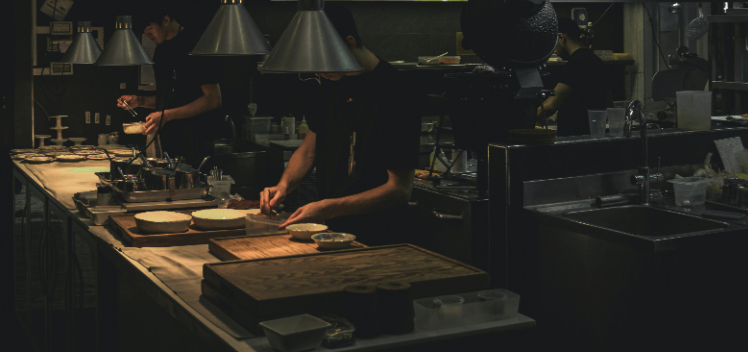
Kitchen staff (Source: freepik.com)
No more paper tickets that get lost
Automating the order transmission to the kitchen saves a considerable amount of time. There’s no longer any need to print, cut out, and manually forward orders.
The Benefits of Automation
A 68% reduction in errors, according to a 2024 Zelty study
Time saved: an average of 15 minutes per service
Traceability: automatic tracking of preparation times
Smart prioritization: Urgent orders are automatically bumped to the top
Optimal Operating Diagram
Order received → Automatic confirmation → Sent to the kitchen →
This order optimization transforms your organization into a well-oiled machine.
Tip 3: Streamline order preparation and tracking
Restaurant Manager (Source: freepik.com)
Organize your kitchen for maximum efficiency
Optimizing your prep work starts with organizing your workspace:
Area dedicated to preparing takeout orders
Color-coded bin system for quickly identifying orders
Kitchen screens displaying orders in order of priority
Streamlined packaging station with all containers within easy reach
Case Study: "Le Bistrot Moderne" Restaurant
This 40-seat Parisian restaurant has implemented an optimized restaurant order management system:
Before optimization:
Average prep time: 18 minutes
Error rate: 12%
Team stress: high
After optimization:
Average prep time: 12 minutes
Error rate: 3%
Team satisfaction: +45%
Result: A 28% increase in orders processed per department, and a significant improvement inthe customer experience.
Key performance indicators to monitor
Track your progress with these key KPIs:
Average preparation time by order type
Weekly error rate
Average time between order placement and delivery to the customer
Customer satisfaction rating (based on reviews on review platforms)
Tip 4: Streamline the handoff between the customer and the delivery person
Man preparing an order (Source: istockphoto.com)
The Importance of the Last Mile
Order pickup is often the weak link in the chain. A customer who has to wait 10 minutes for their "ready" order can turn a positive experience into a negative review.
Checklist for an Efficient Handover
For takeout orders:
✅ Visible numbering system
✅ Designated waiting area
✅ Automatic "order ready" SMS notification
✅ Systematic quality control before delivery
For deliveries:
✅ Area for delivery drivers
✅ Orders labeled with platform name
✅ Automatic verification via QR code
✅ Real-time tracking of delivery drivers
Optimizing the customer experience
Turn waiting into an opportunity:
Serve drinks or appetizers
Showcase your daily specials
Collect customer reviews via QR code
Showcase your loyalty program
This approach improves customer loyalty while boosting the restaurant's profitability.
Tip 5: Analyze your performance and make ongoing adjustments
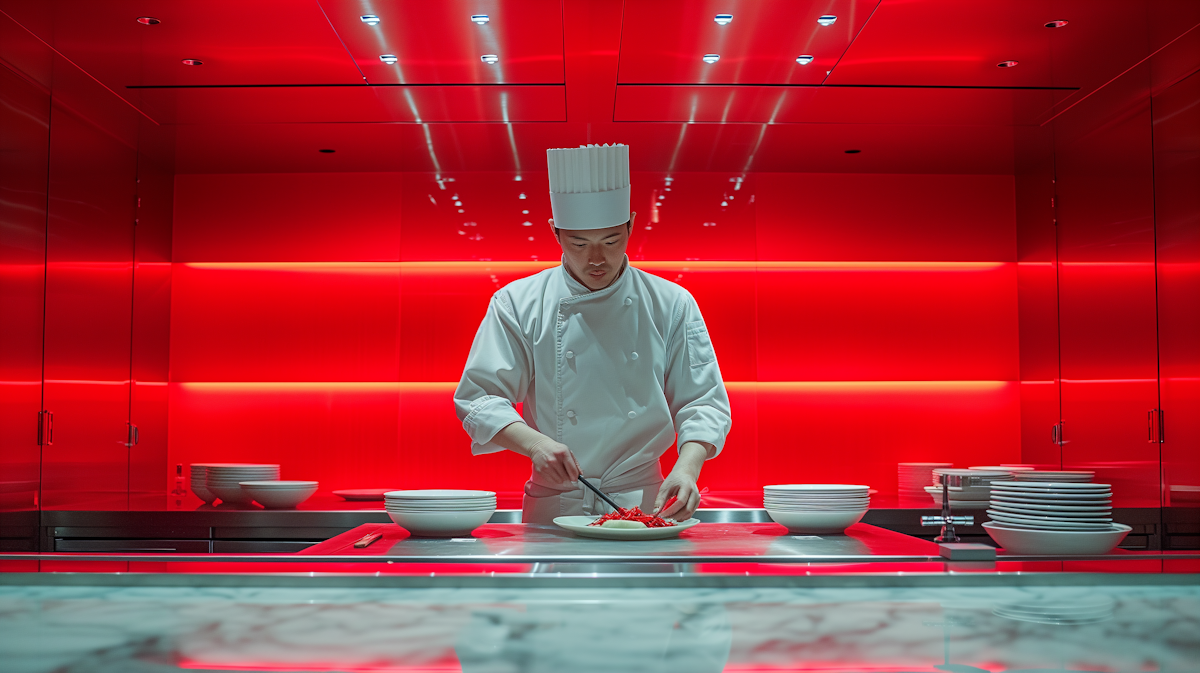
Cook (Source: pexels.com)
The Power of Data
Effective restaurant order management relies on data analysis. Without metrics, improvement is impossible!
Dashboard of Key Performance Indicators
Indicator
Objective
Frequency of follow-up
Average preparation time
Less than 15 minutes
Daily
Error rate
Less than 2%
Weekly
Satisfaction rating
Rated higher than 4.5/5
Weekly
Delivery/Takeout
+15% per month
Monthly
Cost per order
Continuous optimization
Monthly
Recommended analysis tools
Built-in dashboards: real-time dashboards
Automated reports: weekly summaries via email
Predictive analytics: forecasting order peaks
Industry benchmarks: comparison with competitors
Standard corrective actions
Based on your analysis, adjust your strategy:
Long preparation time → Team training or recipe review
High error rate → Improvement of verification processes
Decline in satisfaction → In-depth customer survey
Stagnant revenue → Testing new offerings or optimizing pricing
Focus: Critical Mistakes to Avoid at All Costs
⚠️ Watch out for common pitfalls!
Mistake #1: Neglecting team training Solution: Schedule regular training sessions on new tools
Mistake #2: Implementing multiple solutions without a cohesive strategy Solution: Opt for an integrated approach with a single partner
Mistake #3: Ignoring customer feedback Solution: Implementing an automated feedback system
Mistake #4: Underestimating the importance of maintenance Solution: Sign a preventive maintenance contract with your service provider
Mistake #5: Neglecting data backup Solution: Daily automatic backup + business continuity plan
Summary: Your 5 top priorities starting tomorrow
🎯 Quick reference guide for immediate actions:
Assessment of your current situation: List all your order channels and measure your processing times
Test a centralization solution: Request a free demo from 2–3 providers
Quick training for your team: a 30-minute briefing on best practices
Implementation of simple metrics: average time, number of errors, customer satisfaction
Optimizing your space: reorganizing your prep/storage area
Useful resources for further reading
Recommended tools
RusHour: a comprehensive order management solution
Google Analytics: Tracking Your Website Performance
Trustpilot: Monitoring Your Online Reputation
Training and guides
Monthly webinars on restaurant digitization
Practical Guide: "10 Essential KPIs for the Restaurant Industry"
"Kitchen Process Optimization" Training
FAQ: Frequently Asked Questions
Q: How much does order management optimization cost? A: The initial investment ranges from €200 to €500 per month, depending on the size of your business. The ROI is typically achieved within 3–6 months thanks to increased efficiency.
Q: Will my teams adapt easily to the new tools? A: With the right support, 95% of teams become proficient with the new tools in less than two weeks. The intuitive interface greatly facilitates adoption.
Q: Can I keep my current delivery platforms? A: Absolutely! A good solution integrates with your existing partners without forcing you to switch.
Q: How can I measure the effectiveness of my investment? A: Track three key metrics: order processing time, error rate, and customer satisfaction. Improvements are usually noticeable as early as the first week.
Optimizing your restaurant order management is no longer a luxury but a necessity for staying competitive. By following these 5 tips, you’ll streamline your operations, reduce stress, and boost your profitability.
Ready to take action? Start today by assessing your current situation and testing a centralization solution. Your teams and customers will thank you for it!
Friday night, 8 p.m. The restaurant is packed. And behind the counter, three tablets are ringing at the same time: Uber Eats, Deliveroo, Just Eat. Your team is juggling between screens, orders are piling up, and the first mistake is just around the corner.
A drop in your rating from 4.5 to 4.0 stars on Uber Eats can cause you to lose 30% of your orders in just a few weeks. In the cutthroat world of food delivery, every tenth of a point on these platforms directly translates into revenue for your business. Here’s how to turn your ratings into a cash cow.
Summer is shaking up consumer habits: increased orders at vacation destinations, demand for fresh meals, and record-breaking peaks in activity. Discover how summer delivery is redefining the customer experience and how RusHour helps restaurant owners capitalize on these opportunities.
Boost your efficiency with streamlined restaurant order management. Discover 5 practical tips to centralize your workflows, automate kitchen operations, and boost your performance today.
Faster delivery, happier customers, optimized logistics: AI is transforming every link in the food delivery chain. Discover the tools, trends, and real-world examples that are redefining connected dining in 2025.
You asked for it. We built it. The RusHour mobile app is now available on iOS and Android. It’s not just a new feature—it’s a complete transformation of restaurant management.