How platform ratings affect restaurant profitability
A drop in your rating from 4.5 to 4.0 stars on Uber Eats can cause you to lose 30% of your orders in just a few weeks. In the cutthroat world of food delivery, every tenth of a point on these platforms directly translates into revenue for your business. Here’s how to turn your ratings into a cash cow.
Restaurant management
This is some text inside of a div block.
A restaurant’s profitability is no longer determined solely within its own walls. With the explosion of home delivery, ratings on Uber Eats, Deliveroo, Just Eat, and other platforms have become crucial financial indicators. A rating drop from 4.5 to 4.0 stars can result in a loss of up to 30% of orders in just a few weeks. In an industry where 63% of consumers prefer to order directly from restaurants, managing performance on delivery platforms has become a matter of economic survival.
Bottom line: Restaurants with ratings above 4.3 stars on delivery platforms generate, on average, 40% more orders than those with ratings below 4.0. With delivery now accounting for up to 35% of revenue at some establishments, every tenth of a point makes a difference in the bottom line.
The Delivery Revolution: When Algorithms Determine Your Revenue
The invisible algorithm that drives your sales
Delivery platforms aren’t just simple storefronts: they use sophisticated algorithms to determine your restaurant’s visibility. These systems take into account your average rating, the number of recent reviews, average preparation time, cancellation rate, and overall customer satisfaction.
A restaurant with a 4.6-star rating will always appear before a competitor with a 4.2-star rating, even if the latter offers more attractive prices. This algorithmic logic turns every order into an opportunity to improve a restaurant’s organic search ranking on these platforms.
The current economic climate is exacerbating these challenges: with operating costs having risen by an average of 6.1% and 42% of French people reporting that they are dining out less frequently than in 2022 due to high prices, delivery is becoming an essential alternative.
The direct impact on order frequency
Industry data reveals a direct correlation between ratings and order volume. Restaurants with a rating of 4.5 stars or higher see 2.3 times more orders than those with a rating below 4.0.
This difference can be explained by consumer behavior: faced with an overwhelming number of options, they use ratings as their first screening tool. 92% of consumers believe that reviews are more reliable than advertising, and 51% have already canceled a purchase because of negative reviews.
Key factors that affect your delivery scores
Preparation time: the number one enemy
On delivery platforms, the difference between the estimated preparation time and the actual time has become a critical KPI. Consistently exceeding the estimated time by 10 minutes can cause a rating to drop by 0.3 points within a few weeks.
This issue is particularly sensitive because it affects the entire chain: delivery drivers waiting, impatient customers, and algorithms that penalize them. With nearly 63% of orders placed less than 24 hours in advance, the demand for immediacy has become widespread across all ordering channels.
The solution lies in detailed order forecasting and optimal coordination between the kitchen and delivery platforms. This is exactly where centralization tools like RusHour come into their own, allowing preparation times to be adjusted in real time based on the workload.
Delivery quality: more than just the food
Customer satisfaction on food delivery platforms goes beyond just the quality of the food. Packaging, delivery temperature, presentation, and even communication in the event of a delay directly influence ratings.
An excellent dish that arrives cold or is poorly packaged will invariably result in a negative review. This reality forces restaurant owners to rethink their delivery service as a standalone offering with its own quality standards.
Handling concurrent requests
One of the biggest challenges is managing multiple platforms at the same time. A restaurant listed on Uber Eats, Deliveroo, and Just Eat may receive a flood of orders across all three channels, causing bottlenecks in the kitchen and a domino effect of delays.
This operational complexity has a direct impact on performance metrics: longer preparation times, order errors, and staff stress. Centralizing order flows therefore becomes essential to maintaining consistent performance across all platforms.
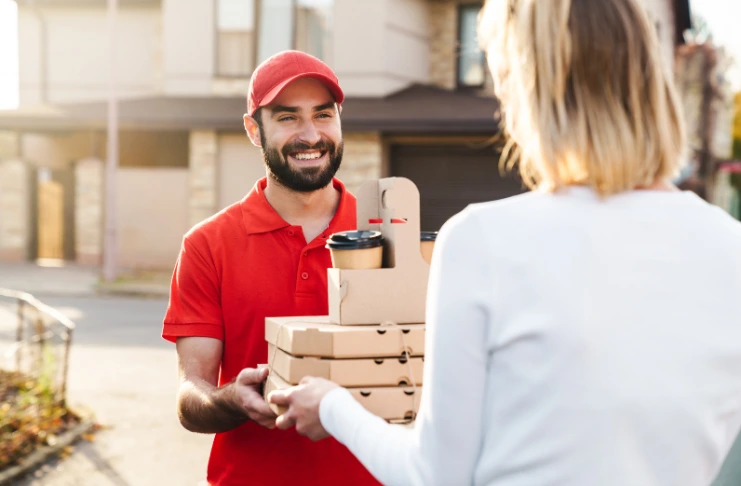
Food delivery (Source: restroworks.com)
The direct economic impact of scores on profitability
The virtuous cycle of good grades
A high score triggers a measurable economic virtuous cycle: improved algorithmic visibility, more orders, increased revenue, the ability to invest in quality, and the maintenance of high ratings.
Restaurants with ratings above 4.4 stars also enjoy better terms from the platforms: lower commission rates, promotional highlights, and priority access to new services.
This economic logic is particularly important in an industry where fewer than one-third of restaurant owners are confident about the future profitability of their establishments.
The Hidden Cost of Poor Grades
Conversely, a drop in ratings leads to significant hidden costs: reduced visibility, fewer orders, lost revenue, the need for promotions to boost business, and an economic vicious cycle.
An industry study reveals that a restaurant whose rating drops from 4.2 to 3.8 stars can lose up to 25% of its online orders within a month. Given that delivery sometimes accounts for more than a third of a restaurant’s revenue, this drop can jeopardize the establishment’s financial stability.
Margin Optimization by Channel
Delivery platforms also allow businesses to optimize their profit margins through a tailored approach. Custom menus, portions optimized for delivery, and prices adjusted to account for platform commissions: these are all strategies for maximizing profitability.
Restaurants that have mastered this multi-channel approach see profit margins that are 15% higher than those that simply offer their regular menu for delivery.
RusHour: Centralization for Better Performance
Why centralize your delivery orders?
The proliferation of platforms creates operational complexity that directly undermines performance. Juggling multiple tablets, managing different interfaces, and synchronizing inventory and prep times—all of these are sources of error that affect ratings.
63% of consumers prefer to order directly from restaurants, but economic realities force restaurant owners to maintain a presence on multiple platforms simultaneously to maximize their reach.
RusHour addresses this issue by centralizing all orders on a single interface. This approach offers direct benefits for performance metrics:
Reduction in data entry errors and missed orders
Optimizing setup times through a comprehensive view of the workload
Automatic inventory synchronization across platforms
Improved monitoring of service quality
The impact on response times
Centralization helps optimize response times, a key factor in platform ranking algorithms. An order accepted within two minutes receives a visibility boost compared to one accepted later.
With RusHour, restaurant owners can process multiple orders more quickly and adjust their preparation times in real time based on their actual workload. This responsiveness directly translates into higher ratings and better algorithmic visibility.
Quality Standardization
By centralizing management, restaurant owners can standardize their quality processes across all platforms. The same packaging, the same presentation, and the same level of service: this consistency helps maintain high ratings across all channels.
This approach is particularly important for multi-location restaurants that need to ensure a consistent customer experience across multiple locations and platforms.
Operational strategies for improving your scores
Proactive management of order spikes
Delivery platforms impose severe penalties on restaurants that cancel or delay orders during peak hours. The solution is to anticipate these peaks and adjust capacity accordingly.
Best practices include:
Dynamic adjustment of setup times based on workload
Predictive inventory management to prevent stockouts
Training teams in crisis management procedures
Using load balancing tools to distribute the load
Optimizing menus for delivery
Not all dishes are suitable for delivery. Creating a specialized menu optimized for delivery can significantly improve customer satisfaction and, as a result, ratings.
This approach requires a rethinking of:
Cooking times to prevent overcooking during transport
Packaging designed to maintain temperature and presentation
Portion sizes to counteract the "cooling" effect
Menu planning to optimize simultaneous preparation
Communicating with customers when problems arise
Incident management directly affects ratings. A delay that is clearly communicated will be better received than radio silence. Platforms now allow you to send messages to customers when a problem arises.
This proactive communication can turn a potentially negative review into a neutral one—or even a positive one—if the crisis is handled with particular care.
The mistakes that ruin your scores (and your profitability)
Systematic acceptance without an assessment of capacity
The most common mistake is accepting all orders without assessing one's actual production capacity. This approach leads to a cascade of delays, errors, and a rapid decline in performance metrics.
It’s better to turn down an order than to deliver it late or in poor condition. Delivery platforms prefer a restaurant that knows its limits to one that keeps making mistakes.
Negligence in packaging
An excellent dish that is poorly packaged will invariably result in a low rating. Investing in high-quality packaging isn't an expense—it's an investment in your future ratings.
This issue is particularly critical for dishes with sauce, fried foods, or desserts that require special containers to maintain their quality during transport.
Failing to account for the seasonal nature of menus
Keeping out-of-stock items listed or offering seasonal products when they are no longer available leads to customer frustration and cancellations. This poor management directly impacts performance metrics.
Synchronizing inventory across platforms and regularly updating product listings are essential to avoiding these pitfalls.
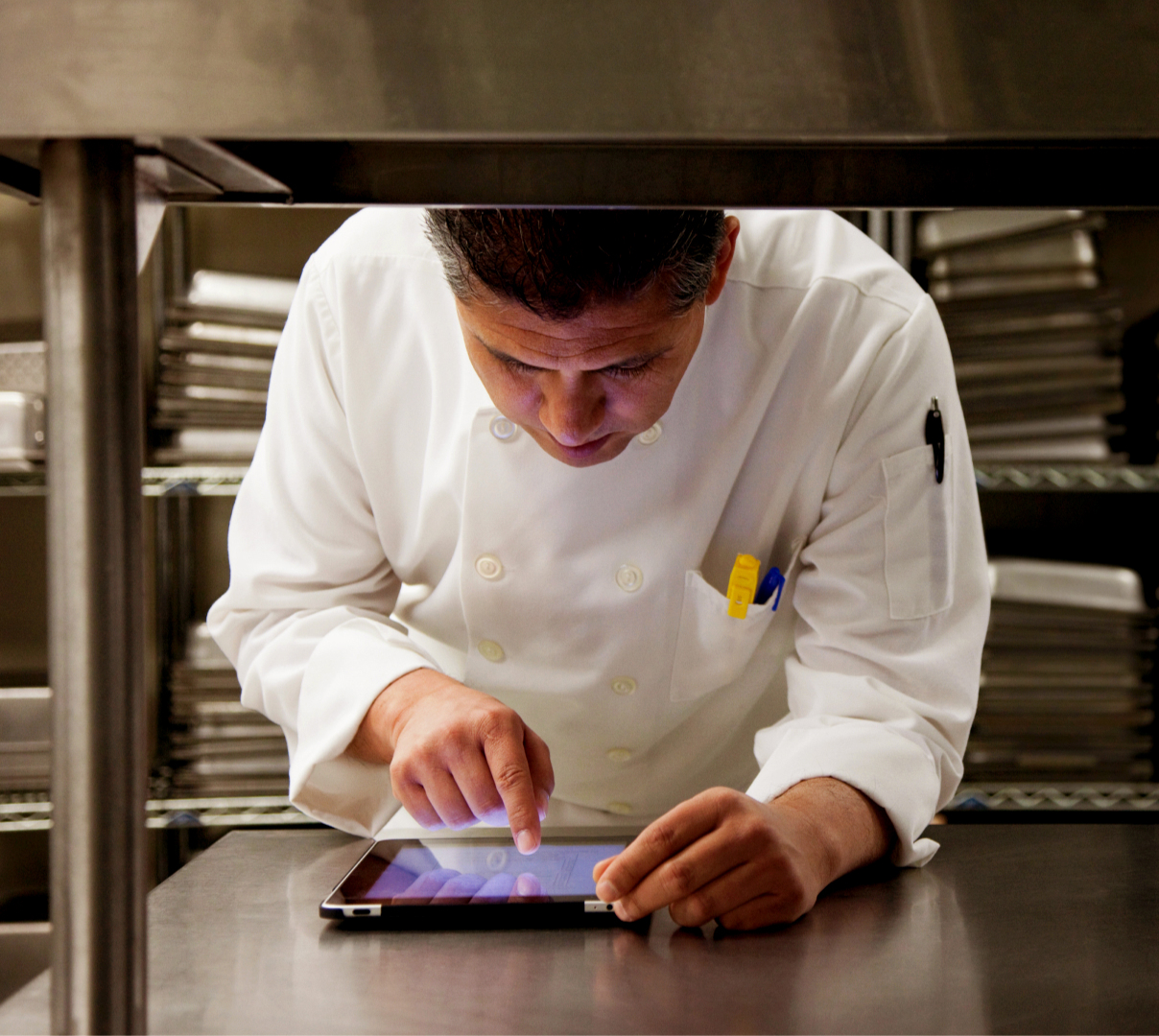
Restaurant owner on a tablet (Source: merchants.doordash.com)
The Evolution of Platforms and Their Future Impacts
Artificial intelligence in algorithms
Platforms are gradually incorporating more sophisticated artificial intelligence algorithms capable of analyzing complex patterns of customer behavior. These systems will take into account data such as a customer’s order history, preferences, precise geolocation, and even the weather to optimize recommendations.
This trend will underscore the importance of consistently maintaining high ratings, as algorithms will favor restaurants that demonstrate consistent performance over time.
Personalizing recommendations
In the future, customer recommendations will become increasingly personalized. Platforms will analyze each user’s habits to suggest restaurants that match their tastes and budget.
This trend will benefit restaurants that are able to maintain high customer satisfaction within their specific segment, underscoring the importance of specialization and excellence within their niche.
The incorporation of new criteria
Platforms are experimenting with incorporating new criteria into their algorithms: environmental impact, local sourcing, and sustainable practices. These factors could become key differentiators in the coming years.
Measuring and managing performance on platforms
Key KPIs to track
In addition to the average score, there are several indicators that can be used to monitor performance:
Order acceptance rate
Average preparation time vs. estimated time
Customer cancellation rate
Order volume by time slot
Changes in ratings by period
When analyzed together, these metrics make it possible to quickly identify areas for improvement and adjust your strategy accordingly.
A comparative analysis with the competition
These platforms provide benchmark data that allows businesses to assess their standing relative to local competitors. This comparative analysis is crucial for identifying their relative strengths and weaknesses.
A restaurant may have a decent rating in absolute terms but be at a disadvantage in the algorithm if local competitors perform better on key criteria.
Dynamic adjustment of its strategy
Managing scores on platforms requires a dynamic approach. Priorities may change depending on the season, the competition, local events, or changes in algorithms.
This strategic flexibility is made possible by tools like RusHour, which allow you to quickly adjust your presence and performance across multiple platforms simultaneously.
Integration into an omnichannel strategy
Consistency between food delivery and table service
Customers don’t compartmentalize their experiences. A customer who is satisfied with delivery might come in for dinner, and vice versa. This interconnectedness requires maintaining consistent quality standards across all channels.
With 68% of consumers comparing menus and prices before choosing a restaurant, ensuring consistency in pricing and quality across all channels has become a matter of overall credibility.
Cross-channel data analysis
Data from delivery platforms can enhance overall customer insights. Favorite dishes, order frequency, and seasonal purchasing patterns: this information can guide menu offerings and marketing strategies.
This data-driven approach makes it possible to optimize the entire restaurant offering, not just the delivery aspect.
Conclusion: Turning Scores into a Driver of Sustainable Growth
Delivery platform ratings are no longer just indicators of customer satisfaction; they have become direct drivers of profitability. With delivery now accounting for a growing share of restaurants’ revenue, neglecting performance on Uber Eats, Deliveroo, and similar platforms amounts to letting a major business opportunity slip away.
The key to success lies in a systemic approach: centralizing orders to optimize operations, standardizing quality across all channels, proactively managing incidents, and closely monitoring performance KPIs. Solutions like RusHour make it possible to turn this complexity into a competitive advantage.
In an industry where pressure on margins is mounting and customer retention is becoming more challenging, maintaining strong ratings on delivery platforms provides a lasting advantage. Because beyond the algorithms, customer satisfaction remains the primary driver of growth.
Restaurateurs who incorporate this digital dimension into their overall strategy will be best equipped to navigate the complex ecosystem of the modern restaurant industry. The time has passed for simply enduring these platforms; now is the time to master them and turn them into allies for profitability.
Friday night, 8 p.m. The restaurant is packed. And behind the counter, three tablets are ringing at the same time: Uber Eats, Deliveroo, Just Eat. Your team is juggling between screens, orders are piling up, and the first mistake is just around the corner.
A drop in your rating from 4.5 to 4.0 stars on Uber Eats can cause you to lose 30% of your orders in just a few weeks. In the cutthroat world of food delivery, every tenth of a point on these platforms directly translates into revenue for your business. Here’s how to turn your ratings into a cash cow.
Summer is shaking up consumer habits: increased orders at vacation destinations, demand for fresh meals, and record-breaking peaks in activity. Discover how summer delivery is redefining the customer experience and how RusHour helps restaurant owners capitalize on these opportunities.
Boost your efficiency with streamlined restaurant order management. Discover 5 practical tips to centralize your workflows, automate kitchen operations, and boost your performance today.
Faster delivery, happier customers, optimized logistics: AI is transforming every link in the food delivery chain. Discover the tools, trends, and real-world examples that are redefining connected dining in 2025.
You asked for it. We built it. The RusHour mobile app is now available on iOS and Android. It’s not just a new feature—it’s a complete transformation of restaurant management.